Garden Clearance in Willesden
Garden clearance in Willesden needs a tidy, practical approach that deals with overgrowth, green waste, awkward outdoor clutter and the mixed contents that often build up in one space. We provide a straightforward service for domestic and commercial outside areas, taking away cuttings, soil, branches, broken planters, old furniture and other non-hazardous garden items. The aim is to leave the area ready for the next stage, whether that is regular upkeep, a redesign or a full seasonal reset.
Our work covers many common clearance tasks, from one-off tidy-ups after trimming to fuller removals where a garden has become difficult to use. We can clear patios, paths, borders, sheds and side returns as part of a single visit, keeping the process organised and manageable. If you need a reliable way to deal with outdoor waste, our service is built around removing items carefully and separating reusable or recyclable materials where appropriate.
For a quotation, it helps to describe the size of the outdoor space, the type of waste present and any access points that may affect removal. You can also note whether the job is mainly green waste, mixed garden clutter or larger bulky items. Clear information at the start makes it easier to match the work to the right team and plan the collection efficiently. If you are comparing options, take a look at the rest of the site and then request a quotation when you are ready.
Garden waste removal and seasonal clearing
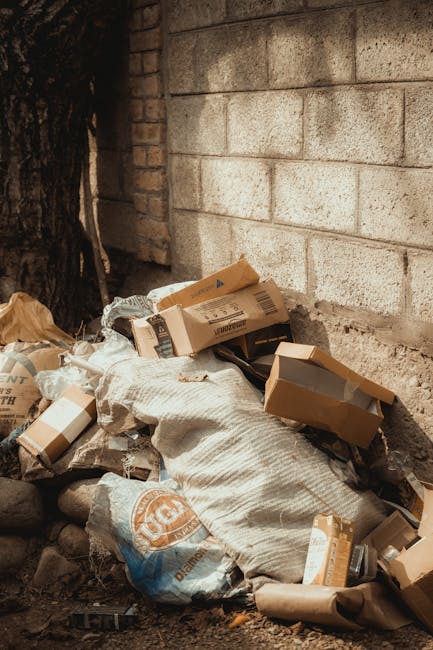
Garden waste removal is often the simplest part of a clearance, but it can still involve a wide range of materials. Grass cuttings, hedge trimmings, branches, weeds and leaves can all be handled alongside bags of mixed outdoor rubbish. We also deal with accumulated waste after a long period without maintenance, where several small piles have become one larger job. The service is designed to remove the clutter without leaving loose debris behind.
Seasonal clearances are useful after pruning, landscaping or storms, when gardens may contain both organic waste and damaged items. In these situations, separating the material matters. Green waste is often different from timber, metal or mixed rubbish, so a sensible approach avoids unnecessary handling and keeps the job organised. If you are planning a larger outdoor clean-up, ask for a quotation that reflects the actual mixture of waste rather than a rough guess.
We can also support customers who want to clear only part of a garden first, then return to the rest later. That is often practical when an area has mature planting, heavy containers or items stored in layers. Small steps can make a bigger clearance easier to manage, especially when there are pathways to keep open or when some items need to stay in place. A tidy sequence of removal is usually better than trying to rush everything at once.
Bulky outdoor items and old garden furniture

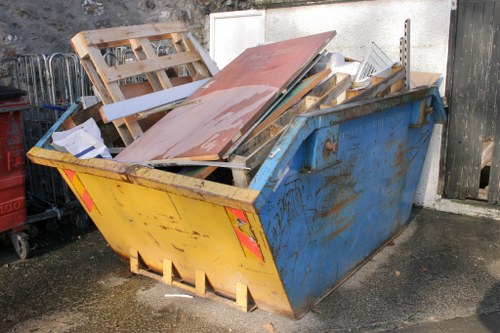
Many outdoor clearances involve more than cuttings. Old benches, broken decking pieces, rusted tools, plant stands, parasols, planters and weathered seating can take up useful space long after they have stopped being practical. We remove bulky outdoor items as part of a broader garden clearance, giving you a clear result without needing to sort each object separately. This is helpful when a garden has slowly turned into storage for items that are too large for normal household waste.
Some pieces can be awkward because they are heavy, damp, splintered or partly fixed in place. Careful handling matters, particularly around walls, paving and planted areas that should be left intact. Where furniture or equipment can be broken down safely, that may make the loading process more efficient. Where it cannot, we focus on controlled removal and sensible lifting so the rest of the space is not disturbed unnecessarily.
When preparing a quote for this kind of work, it is useful to mention whether the items are stacked, sheltered, dismantled or mixed with green waste. That simple detail helps identify whether the job is mostly a clearance of loose garden waste or a larger mixed removal. You can also note if anything is delicate nearby, such as glass, pots or recently planted beds. A clear description usually leads to a more accurate price discussion, especially for combined outdoor clearances.
Garden sheds, side returns and hard-to-reach spaces
Many gardens in Willesden include narrow side returns, sheds, lean-tos or small storage spaces that collect items over time. These areas often hold a mixture of tools, containers, bags, broken household goods and spare materials that were never meant to stay there permanently. Clearing them properly can open up room for day-to-day use again and reduce the sense that the garden is carrying too much extra weight.
Access is often the main practical issue in these jobs. A shed with limited headroom, a side path with tight turns or a rear garden reached only through the property can all affect how the clearance is completed. It helps to know whether items can be carried straight out, whether they need to be moved through a house or whether there are steps and gates to factor in. The more precise the access details, the easier it is to plan the work.
Some customers prefer to clear hidden storage areas before dealing with the main garden itself, because that makes the rest of the job easier to organise. Others want everything removed in one visit so that there is a complete reset from front to back. Both approaches can work well. If you are unsure what to prioritise, the most practical order is usually the one that makes access safer and the final space easier to use.
Household, property and mixed clearance support
Garden clearance is sometimes part of a wider home or property clean-out, especially where outdoor space has been used as overflow storage. In those cases, the work can include items from patios, driveways, basements, utility areas and adjoining garden zones. The advantage of a mixed clearance is that everything can be organised as one project rather than split into several small jobs that take longer to complete.
If the outdoor area is connected to a larger clearance, we can focus on the garden section while keeping the collection process consistent with the rest of the load. That may include household items that are weathered but still safely movable, as well as outdoor waste that has built up around them. This is useful where the boundary between indoor and outdoor storage has become blurred and a clear sorting plan is needed before removal.
- Green waste from routine garden maintenance
- Bulky outdoor furniture and broken seating
- Loose storage items from sheds and side returns
- Mixed garden clutter from long-neglected spaces
About Willesden

Willesden is an area in north-west London within the London Borough of Brent, with a character shaped by long suburban growth, transport links and a mixture of residential streets. Historically, it developed from a village centred around St Mary’s Church into a much more built-up district as London expanded in the nineteenth and twentieth centuries. The old village core is still reflected in local street patterns around the church and high road, while later housing spreads outward in denser terraces, mansion blocks and post-war estates. This layered pattern gives the area a varied appearance, with quieter residential roads set alongside busier routes and local centres. Willesden Green, the best-known nearby centre, is associated with the Jubilee line and a traditional high street, while other parts of the wider district include streets with strong Victorian and Edwardian building stock. The area also sits close to Kilburn, Cricklewood and Harlesden, but it retains its own identity through local institutions, parks and everyday shopping streets. Public open space, rail and Underground connections, and a long history of housing growth all form part of the local picture, making Willesden a recognisable part of inner north-west London rather than a simple extension of any one neighbouring district.
Clearance for larger outdoor projects
Some garden clearances are tied to improvement work rather than routine tidying. Before new planting, turf replacement, patio changes or fencing work begins, the area often needs to be stripped back first. That can involve removing old pots, damaged sleepers, broken edging, rotting timber and accumulated general clutter so the contractor or homeowner can begin with a cleaner, safer base. Clearing in advance also makes it easier to see what is actually present and what can be kept.
Project-based clearance is usually best approached in stages if the garden has several zones. A front section, rear border, lawn area and storage corner may each need different treatment, especially where waste is mixed with reusable fixtures. Rather than treating all outdoor material as one category, it can be sensible to separate timber, metal, hard plastic and compostable material where possible. That makes the work more orderly and can support more appropriate disposal routes.
We can also clear after failed or abandoned garden projects, where half-finished work has left behind bags, offcuts and temporary materials. These jobs often need a calm, practical approach because the remaining items can be scattered rather than stacked. If you are thinking about how to move from a cluttered plot to a usable one, the first step is often a focused clearance that removes the unwanted layers before any new design is added.
What we can clear from gardens
Garden clearance can include a broad range of outdoor items, but it is still important to keep the work sensible and safe. We remove loose green waste, old garden furniture, broken containers, soil in manageable amounts, timber pieces, bags of mixed outdoor rubbish and other non-hazardous material from outside spaces. The exact scope depends on what is present, how it is stored and whether the items are reachable without damaging surrounding features.
Some materials need a more careful judgment than others. Heavy soil, concrete-like debris and wet waste may require additional handling, while fragile planters or sharp metal items need care during loading. If there are items you are unsure about, it is best to describe them clearly rather than group them under a general label. A good quotation depends not only on volume, but also on the type of material and the effort needed to remove it safely.
For customers comparing services, it can be helpful to think in categories. Is the job mainly organic garden waste, mainly bulky objects, or a mixed clearance with both? Are the items all in one spot, or spread across several parts of the property? Answering those questions in advance keeps the discussion focused and helps the quote reflect the real job rather than a rough assumption.
Planning your clearance and the quotation process
A useful quotation usually starts with the basics: the approximate amount to be cleared, the type of garden waste involved and any access points that could affect loading. Photographs can help where a job is hard to describe, but written details still matter because they explain what the images do not show. If items are behind a gate, down steps or spread between several areas, that is worth noting alongside the main list of materials.
It is also sensible to mention any parts of the garden that should stay untouched. That may include planted borders, fragile surfaces, ponds, ornaments or stored items you want to keep. The more clearly the scope is defined, the easier it is to separate the clearance from anything that is not part of the job. This is particularly helpful for mixed outdoor spaces where storage and garden use overlap.
If you want to move forward, keep the request simple and specific. A short description of the space, the waste and the access is usually enough to begin. Ask for a quotation when the scope is clear, then decide whether you want the whole area cleared at once or in stages. That approach keeps the process practical and avoids unnecessary back-and-forth.
Handling mixed waste and recycling-conscious removal
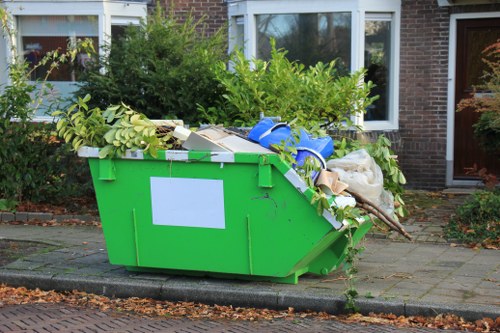
Outdoor clearances often produce a mixture of waste types, and a sensible service needs to deal with them without confusion. Garden waste may be collected separately from items such as metal frames, plastic containers, timber offcuts or worn-out household pieces that have ended up outside. Sorting matters because mixed loads can require different handling, and separating material early can make the clearance process smoother and more orderly.
Where items are suitable for recycling or recovery, the goal is to direct them appropriately rather than treating everything the same way. That does not mean every load is identical, but it does mean the service should look at the contents carefully before removal. A planned approach is particularly useful for clearances that involve both organic waste and durable materials, because the balance between them affects how the job is managed from start to finish.
For many customers, the most helpful outcome is simply a garden that feels easier to use again. That might mean a cleared path, a usable patio, a more open lawn edge or a storage space that is no longer overloaded. If that is your aim, start with a short description and request a quotation. We can then match the clearance to the scope of the work and keep the process straightforward.